My reading (listening really) to the word continues with the Book of Exodus as we follow the life of Moses, a descendant of Abraham. In addition to listening to the Bible in the Year Podcast, I did a little extra credit to better understand the stories.
First thought, I never knew God was known as “Yahweh.” I have never heard that name or word before in my life. Fascinating.
EXODUS
A crucial book of the bible in my opinion housing so many important stories. The Introduction of Moses who is the chosen one that God shows himself to as he is a direct descendant of Abraham. The lineage, Moses was part of the Tribe of Levi, descending from Abraham through Isaac and Jacob (Israel). The lineage is generally traced as: Abraham > Isaac > Jacob > Levi > Kohath > Amram > Moses.
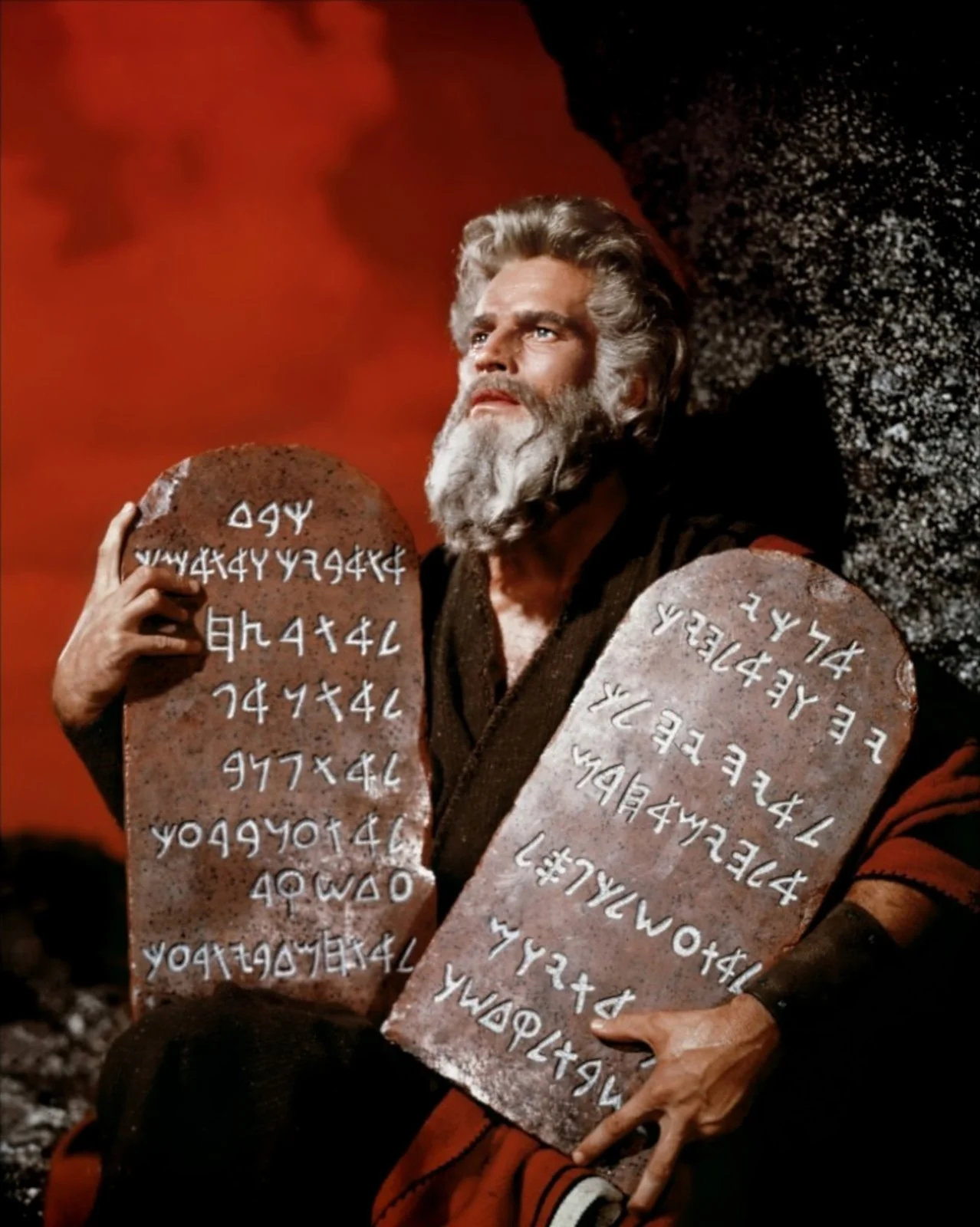
Moses and the Ten Commandments
Moses was born as a Hebrew but at the time Pharaoh said all sons of Hebrew’s must die to control the population. Moses’ mother sent him down the Nile river in a basket to save him and the Pharaoh’s sister found him and raised as her own. Years later, Moses left Egypt and found Jethro in the desert town of Midian where he met his wife, Zipporah. he lived in Midian for 40 years before returning to Egypt after he found God and received the message to free his people.
The Plagues:
In Egypt, asking Pharaoh to release all of the Hebrew slaves was a tall order. Why would Pharaoh release so many people he’s had under his reign for over 400yrs? To prove Moses had seen God and was protected by God’s strength the 10 plagues were executed to get Pharaoh to listen.
Blood: The Nile turned to blood, killing fish and taking away drinking water and bathing water from the Egyptians.
Frogs: Frogs covered the land.
Gnats/Lice: Dust turned into gnats. Egyptians loved cleanliness and usually shaved their heads and wore wigs.
Swarms of Flies / Insects
Pestilence: Livestock died impacting food for the people
Boils: Sores on humans and animals.
Hail: Destructive hail.
Locusts: Locusts devoured crops, again impacting food for people.
Darkness: Three days of darkness. This was symbolic as Egyptians believed in many Gods, one was the God of Sun.
Death of the Firstborn: The final plague, killing all firstborn sons and cattle. This took the life of Pharoah’s son. This is also symbolic as it’s similar to how Pharoah ordered all Hebrew son’s to be killed which should have killed Moses however he was saved.
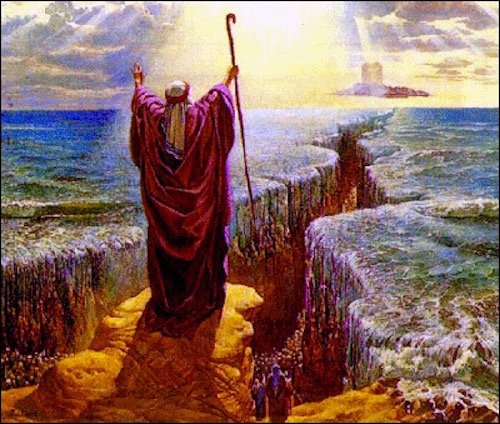
Parting of the red sea
Upon getting their freedom, the hebrew people left Egypt for the desert. Pharoah gathered him army in anger and came after them and met the Hebrew people at the shoreline of the Nile. This is where the magic of God opened up the Nile to provide safe passage to get out of harms way.
Moses climbed Mt Sinai again to find God and hear his word. Here came the famous and notable 10 Commandments of how we should worship only one God and how we should behave socially.
The Ten Commandments:
I am the Lord thy God. Thou shall not have strange gods before Me.
Thou shall not take the name of the Lord thy God in vain.
Remember to keep holy the Lord's day.
Honor thy father and mother.
Thou shall not kill.
Thou shall not commit adultery.
Thou shall not steal.
Thou shall not bear false witness against thy neighbor.
Thou shall not covet thy neighbor's wife.
Thou shall not covet thy neighbor's goods.
Extra Credit
I watched the movie “The ten Commandments” with Charleston Heston with my family while in Cleveland. It was a long 4-hr story of Moses but it took quite a few creative liberties. I much preferred the documentary I found on Netflix called “Testament: The Story of Moses” which is a more realistic story that follows the bible more directly and also has historians, Authors and Rabbis adding commentary along the way.
LEVITICUS
Similar to Job, Leviticus is written in a way I didn’t love, it felt repetitive in language and was focused on creating the rules of how people should worship God, very specific about different offerings, what makes people clean versus unclean, what sexual relations are unaccepted like incest but also two men. It’s like a book of laws of how people should act, worship and repent.
Passages that surprised me but where it states in the bible specific topics of interest:
Marriage Restrictions (21:7–9, 13–15): Priests were forbidden from marrying prostitutes, divorced women, or defiled women. The High Priest was restricted to marrying a virgin.
Physical Disqualifications (21:16–24): Priests with physical ailments like blindness or deformities could not offer food or come to the alter however were allowed to eat the body of christ separately. This seemed very judgmental and discriminatory.
Passover and Sabbath
In the book of Leviticus, God describes passover for the first time and the 7th day of rest where work is forbidden. In the modern world this is our christian Sunday and Friday night into Saturday for Judiasm. It’s also symbolic to God’s creation of earth and on the 7th day he rested.
PSALMS
Much like Proverbs it is written poetically in teachings. One that stood out to me in beauty was from Psalm 119:105: "Your word is a lamp to my feet and a light on my path." It’s a beautiful picture.
Pslams is a book of prayers.
Next up are Deuteronomy and Numbers with continued reading of Pslams.